NeetoDesk Changelog


image_uvfjp864k.png

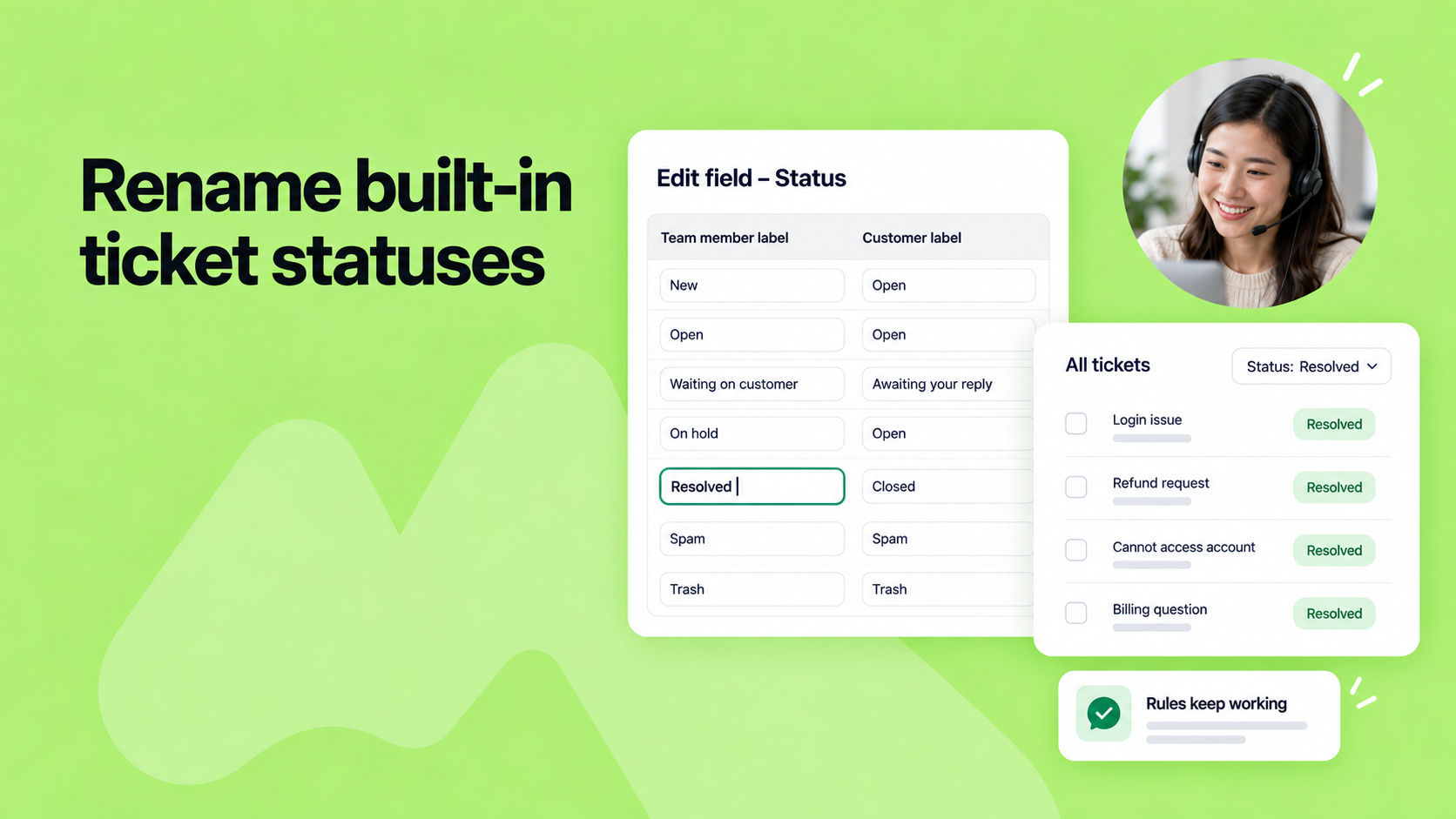
You can now rename built-in ticket statuses like New, Open, and Closed, so your team sees the wording they actually use.

To rename a status, go to Admin Panel > Ticket fields > Status and edit the team member label.

Renaming only changes the wording. Tickets keep the same status, and your automations, views, and macros continue to work as before. The new label also appears in ticket list filters and ticket volume reports.

To learn more, read our help article.

image_B2A9nXMAcl.png

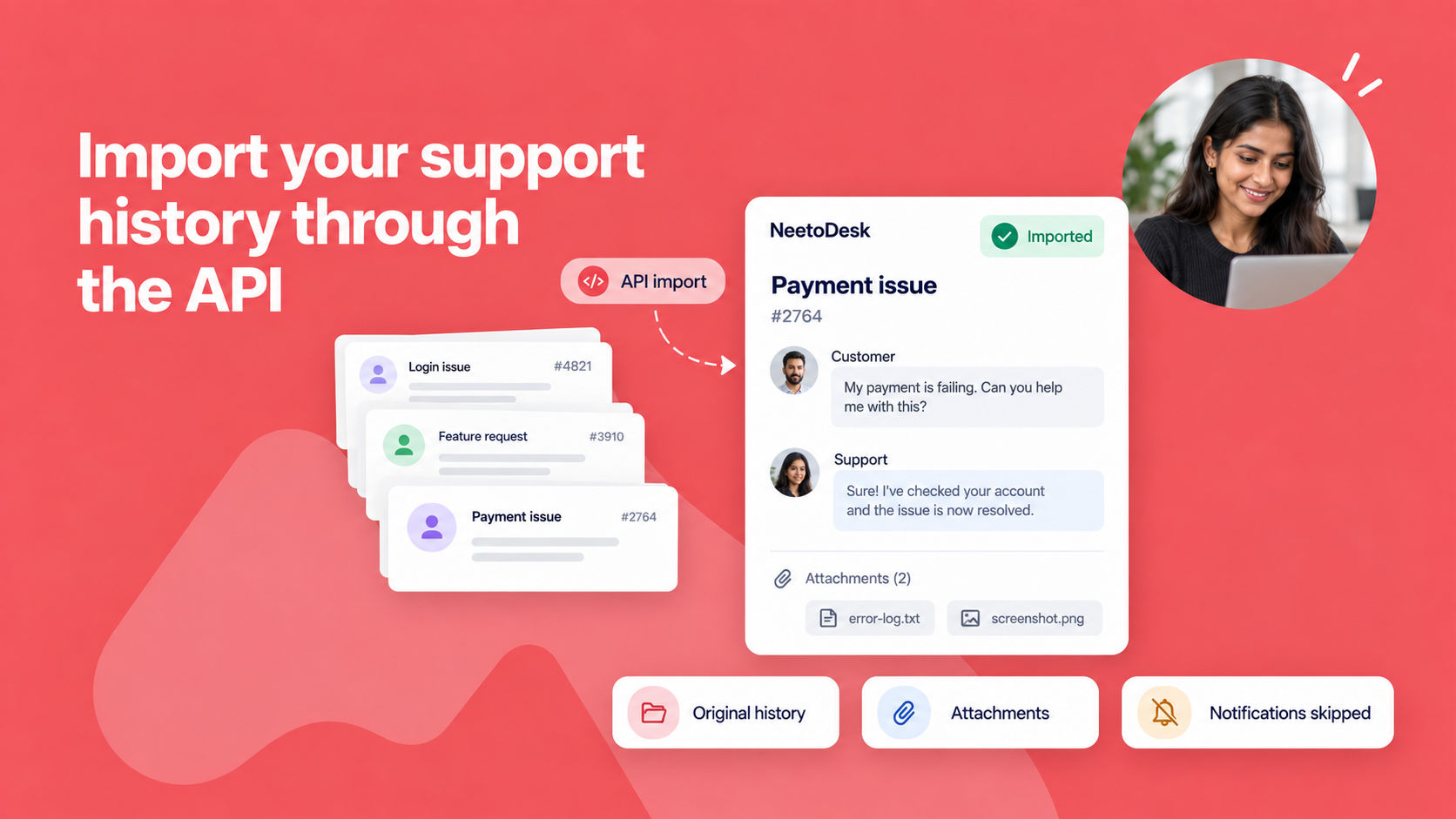
If you are moving to NeetoDesk from another helpdesk, you can now bring your existing tickets with you through the API. The Create ticket and Create comment calls accept the original dates, the author's email address, file attachments, and the ticket's id in your previous system.

Imported tickets keep their real dates, so your reports stay accurate, and notifications and automation rules are skipped by default so an import does not email your customers or agents.

To learn more, read the API documentation.


Custom ticket fields API

Sagar Anadkat
image_1MZsI-GhL.png

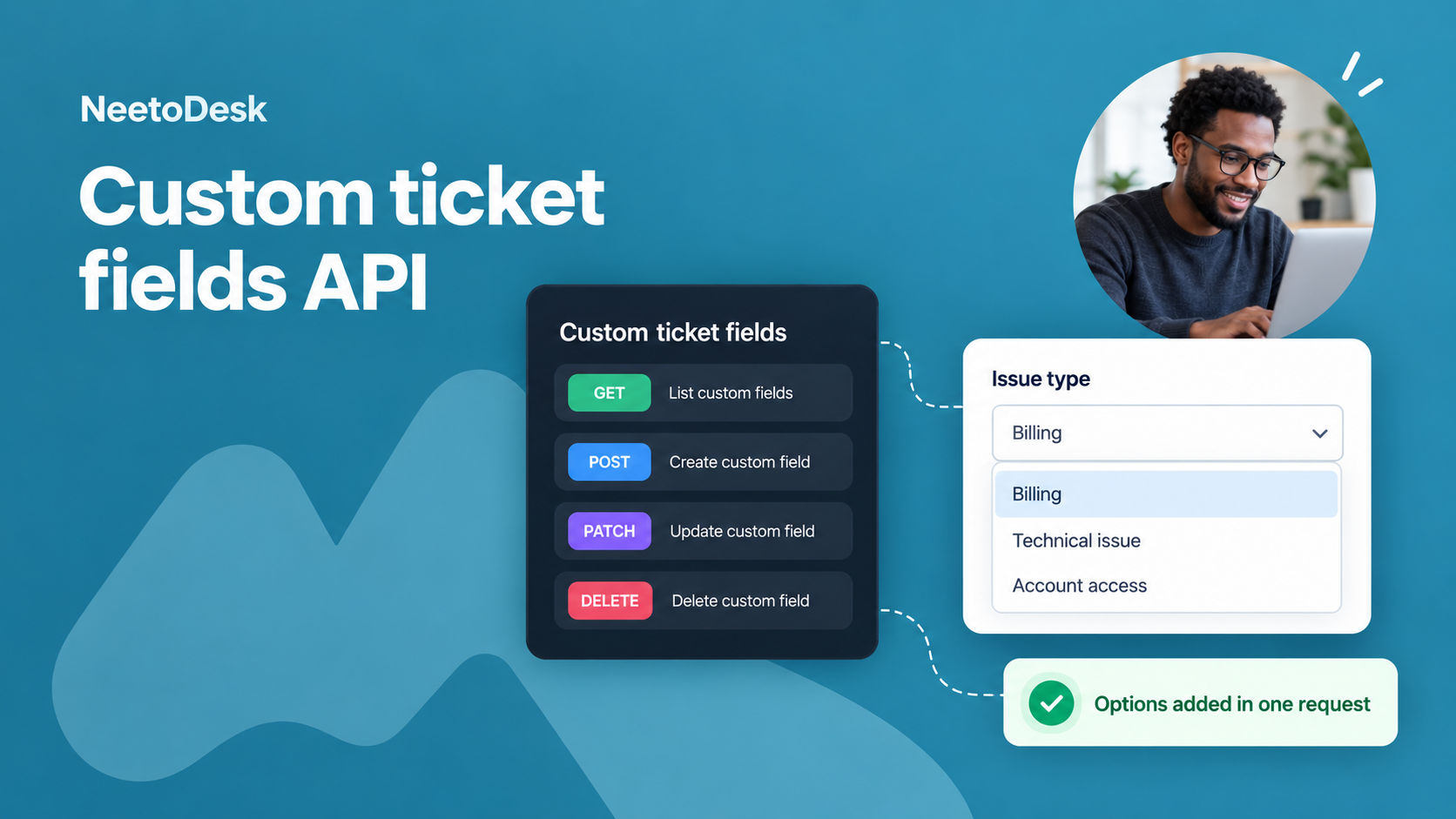
You can now list, create, update and delete custom ticket fields with the API, using your workspace API key. Until now, custom fields could only be managed one at a time in the Admin Panel.

A dropdown field can be created with all of its options in one request, so a field with hundreds of values no longer has to be typed in one option at a time. The same API updates a field later: rename it, add or remove options, or deactivate it when it is no longer needed.

To learn more, read the API documentation.


image_K15WEcTM8.png

Out-of-office and other automatic replies that arrive outside an existing ticket conversation no longer create new tickets. NeetoDesk detects them using the headers added by autoresponders and moves them to spam, keeping them out of your inbox and ticket counts.

If an automatic reply is sent to an existing ticket, it will still be added to that ticket as a customer reply. NeetoDesk won’t send an automatic acknowledgement in response, preventing reply loops with autoresponders.


image_9IeK11csG.png

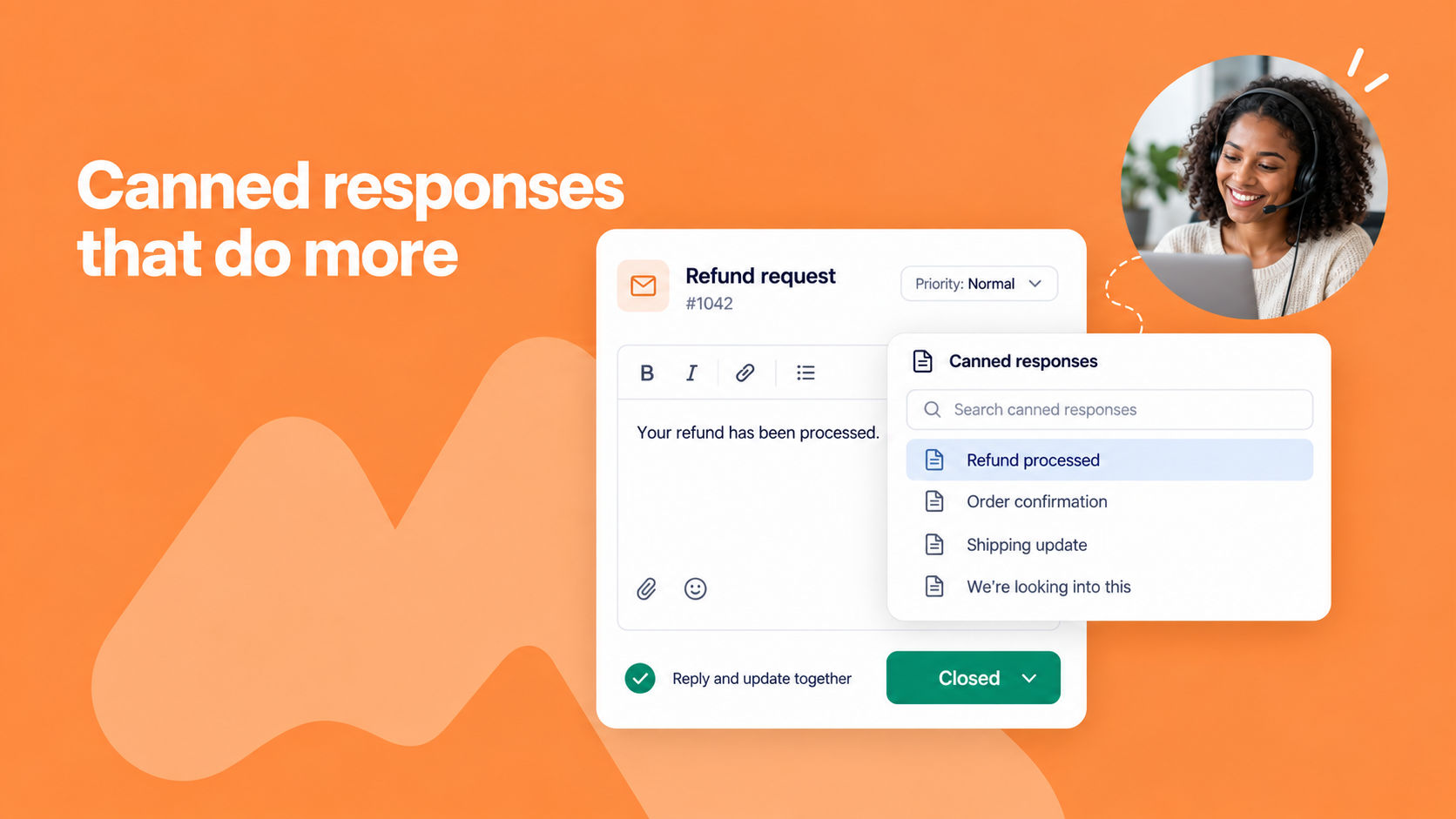
You can now use canned responses when creating a new ticket, not only when replying to one.

A canned response can also update the ticket's status, priority and custom fields when you insert it. For example, a "Refund processed" response can add the reply and close the ticket in one click.

To know more, read this help article.


image_FZbprtZbR.png

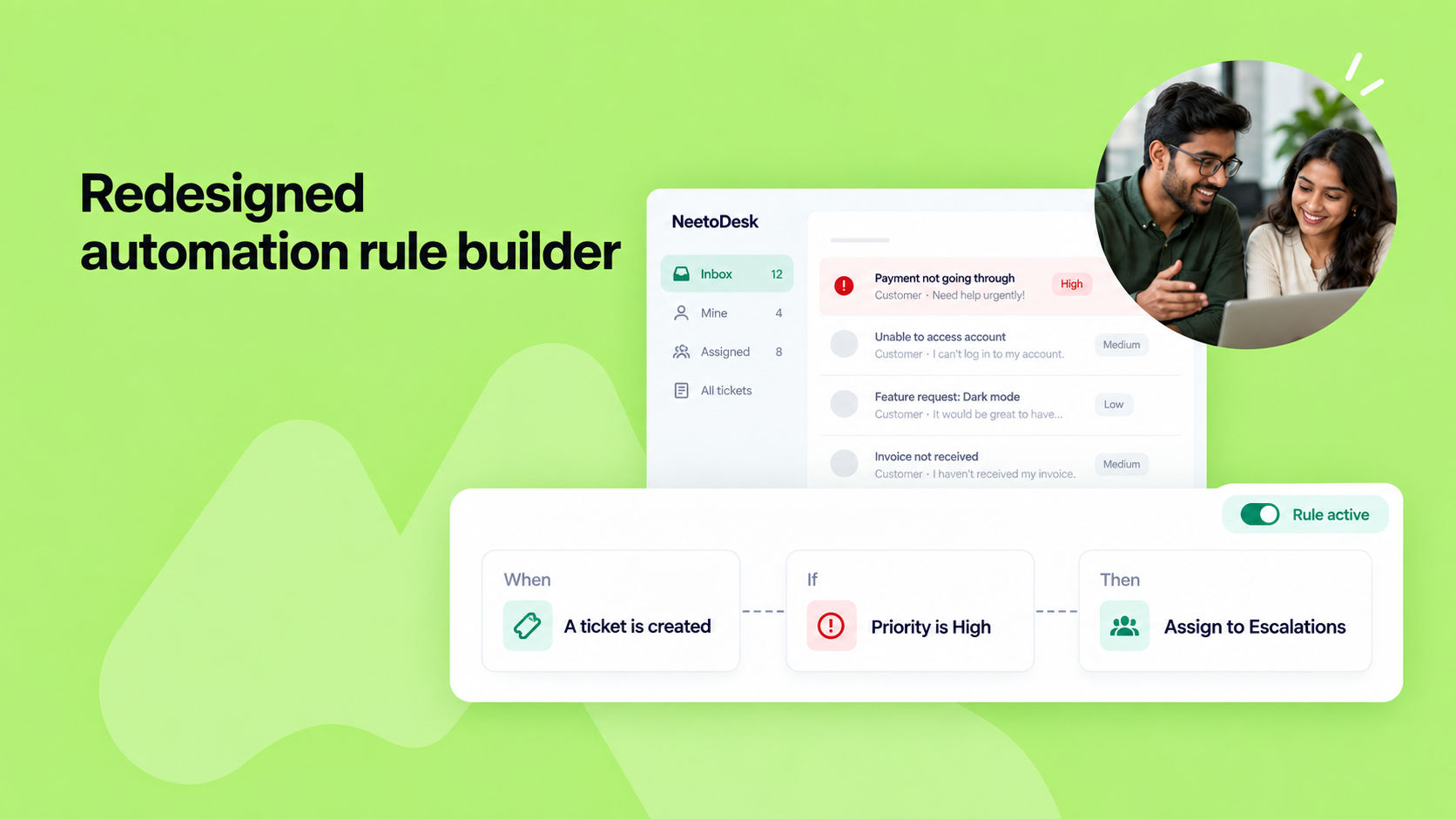
We've redesigned how you create automation rules. The builder now reads like a sentence: When a ticket is created, if the priority is High, assign it to the Escalations group. This makes it easier to see what a rule does at a glance.

The new builder is live for everyone. Your existing rules keep working as before and open in the new builder when you edit them.


image_FOGGs1WsA.png

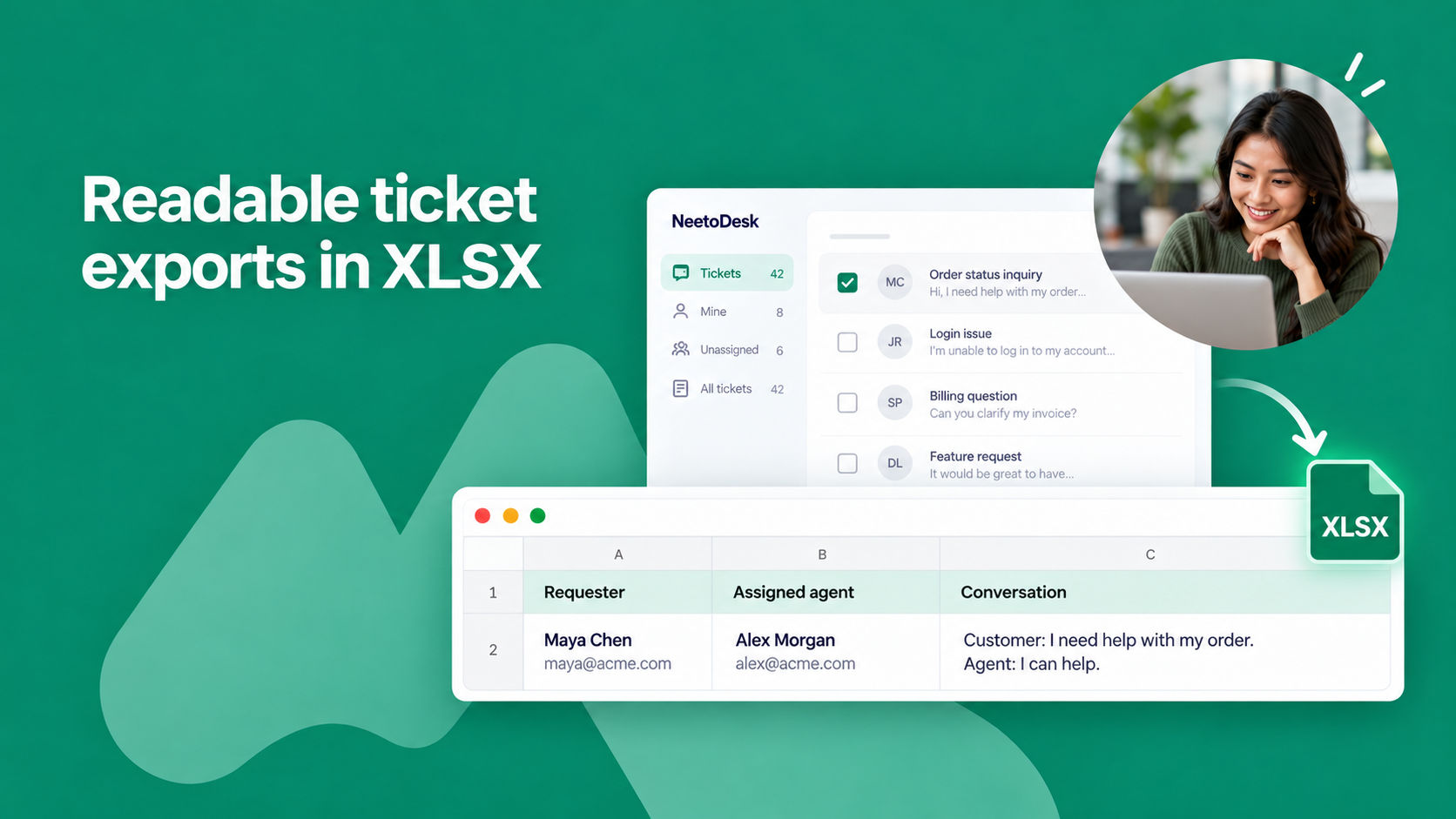
You can now export your tickets as an .xlsx file, and every ticket row carries the requester, the assigned agent, and the whole conversation in plain text.

When a customer asks for a copy of their ticket history, or you need to hand a set of tickets to someone outside the support team, the file is now readable as it is. Each row shows the requester's name and email, the assigned agent's name and email, and a conversation column with the full thread in order, one entry per message with the time it was sent, who wrote it, and whether they were the requester or an agent.

To learn more, read our help article.

image_AnYpsKLoq9.png

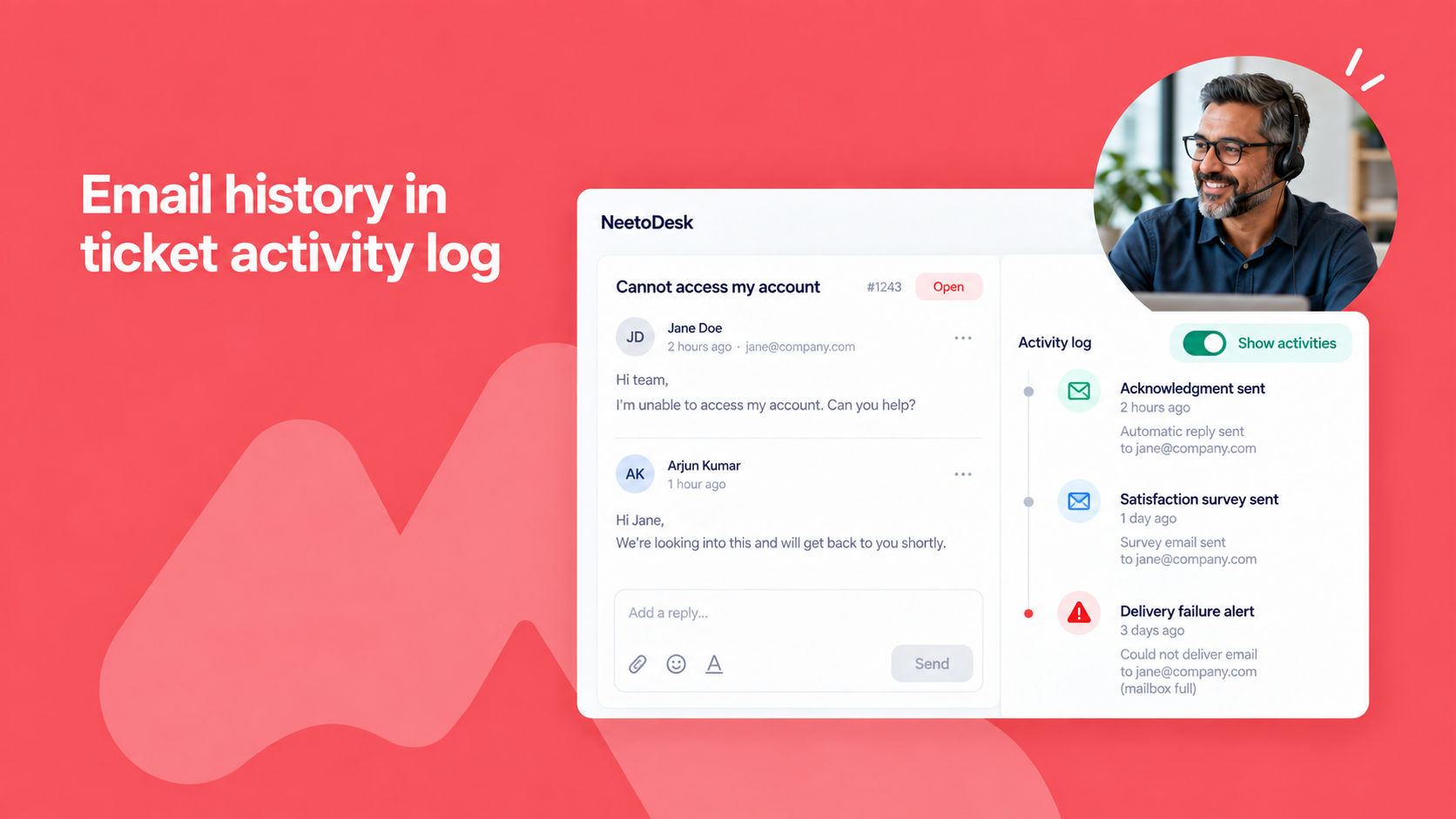
You can now see every email NeetoDesk sends about a ticket in the ticket's activity log. Automatic replies from automation rules, customer satisfaction surveys, SLA escalation emails, notices about attachments that were too large, and delivery failure alerts all appear in the conversation timeline, in the order they went out.

When a customer says they never received an acknowledgment, you can open the ticket, click Show activities, and see what actually went out instead of guessing.

To learn more, read our help article.
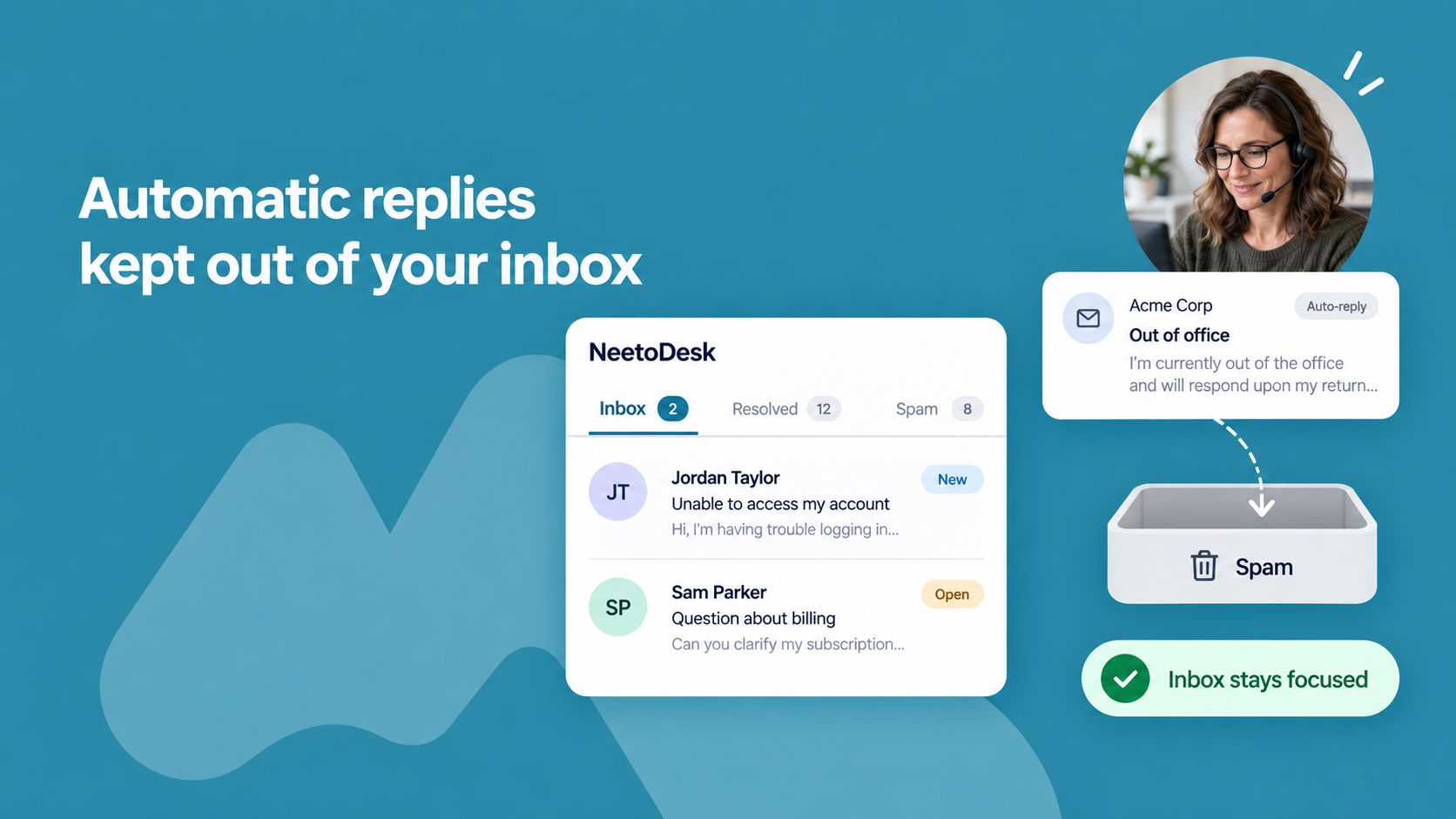

image_4xtf_3C3SE.png

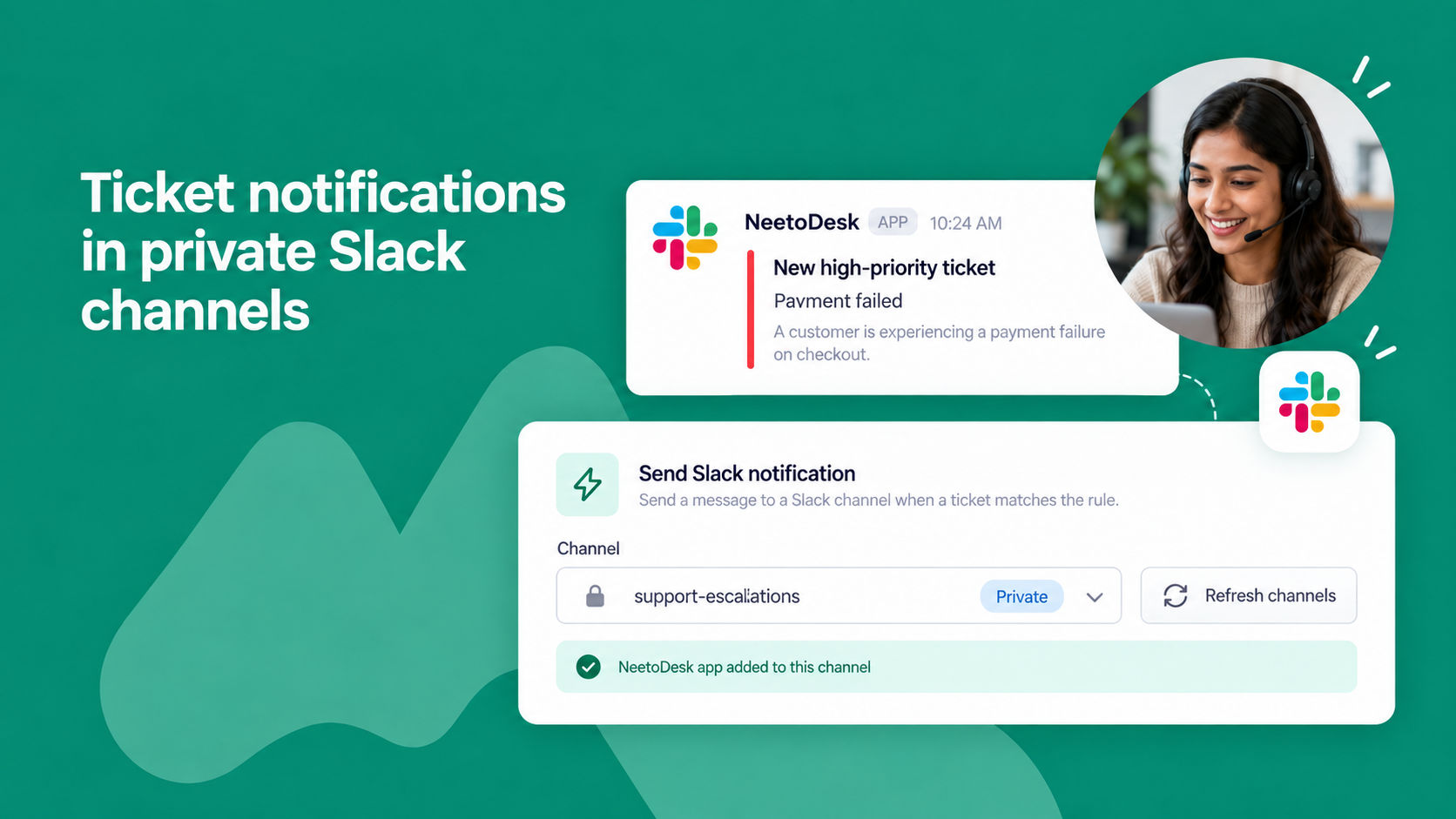
You can now send ticket notifications to private Slack channels.

Previously, only public channels appeared in the channel list when setting up an automation rule, so notifications could only be sent to channels visible to everyone in your workspace.

To use a private channel, first add the NeetoDesk app to that channel in Slack. Then open your automation rule and click the Refresh button next to the channel list. Your private channels will appear alongside the public ones, clearly marked as private, and you can select them just like any other channel.

To learn more, read our help article.

image_NuEtk41c_.png

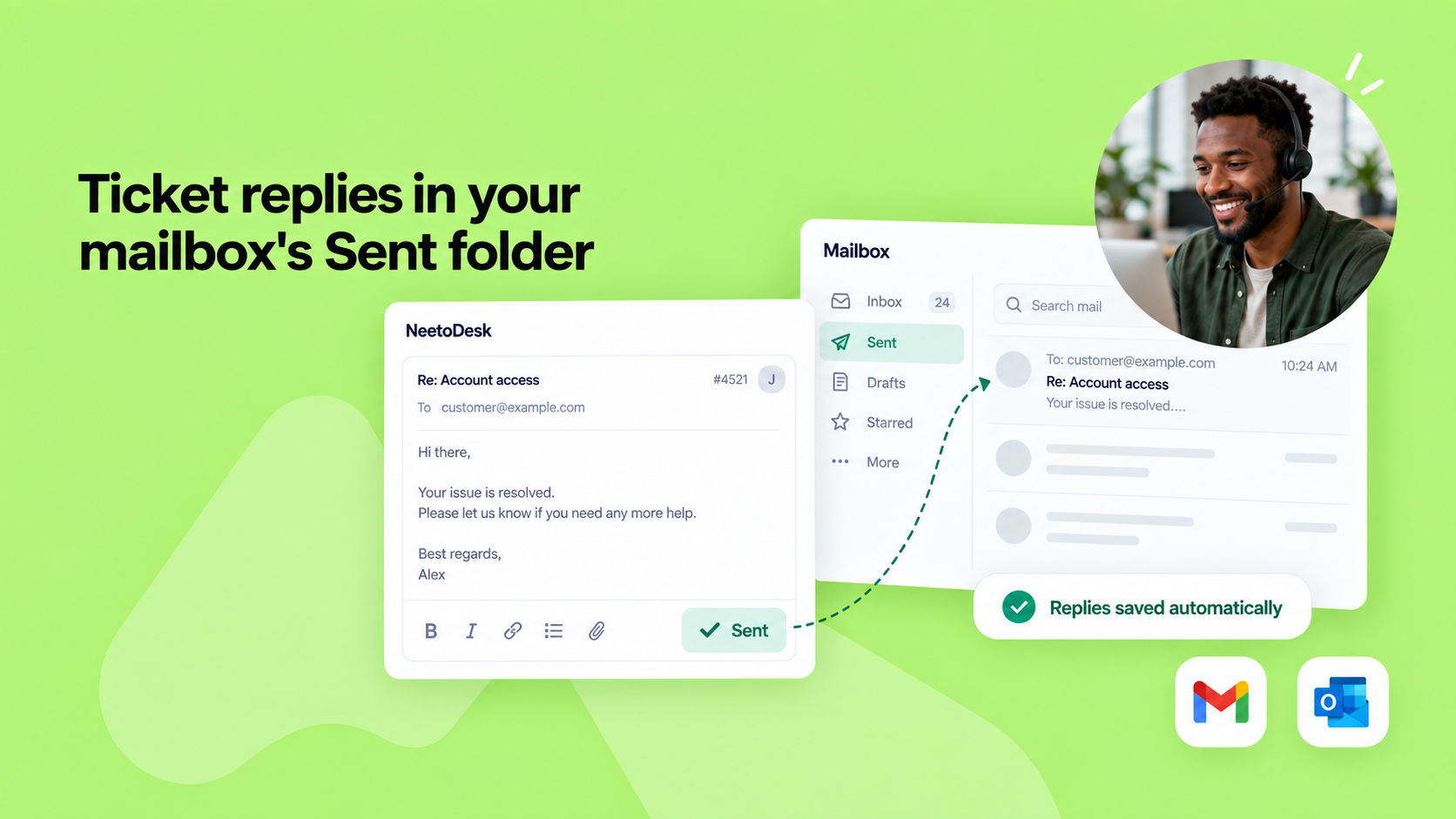
When a mailbox is connected to NeetoDesk, the replies your agents send from tickets now also appear in that mailbox's Sent folder. Your mailbox keeps a complete record of each conversation, even for people on your team who never open NeetoDesk.

This works for Gmail, Microsoft Outlook and custom mail servers, and there is nothing to turn on.

If you connected an Outlook mailbox before July 14, 2026, disconnect it and reconnect it once. This gives NeetoDesk the permission it needs to save to Sent Items.

To know more, read this help article.